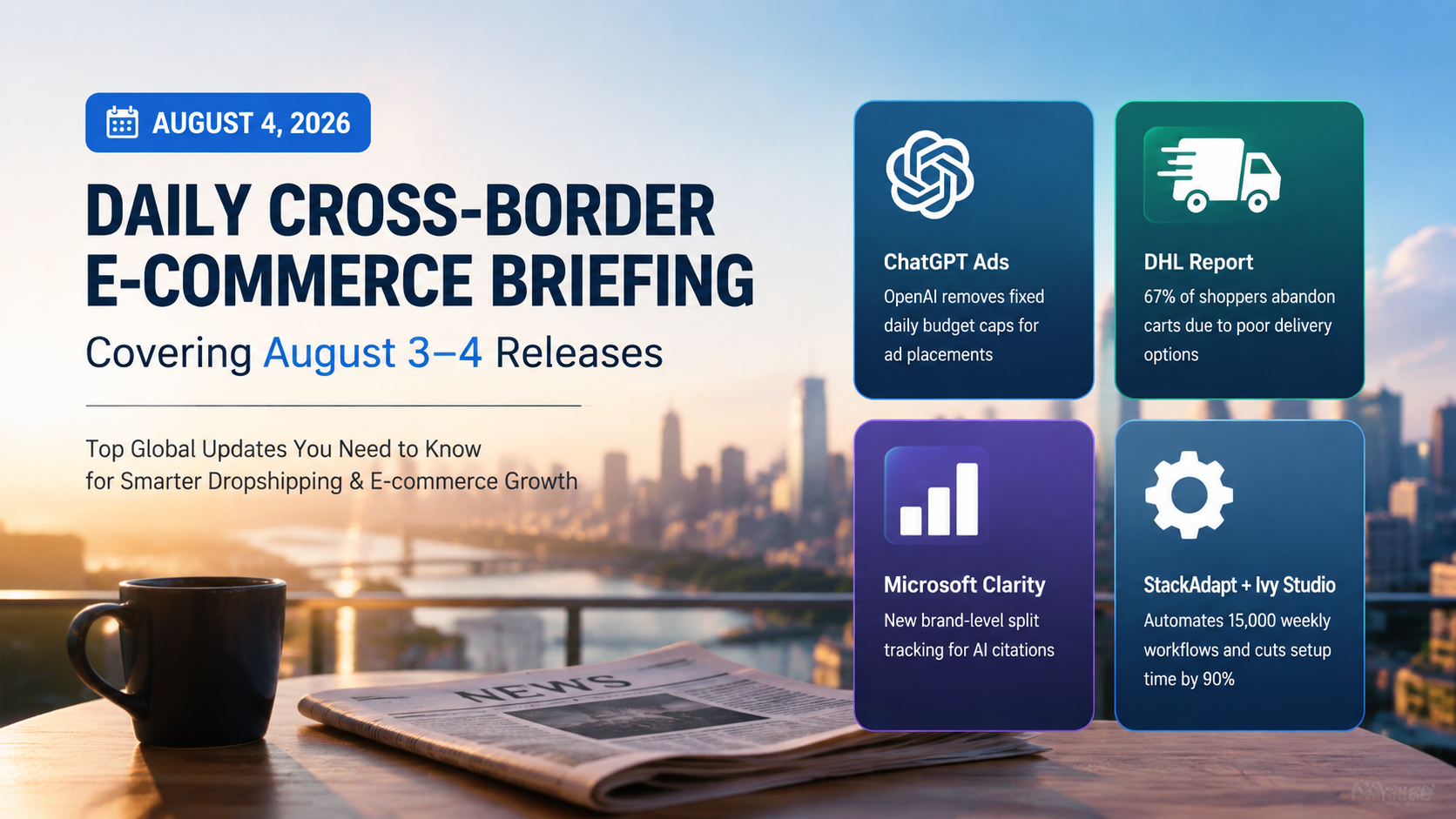
Daily Cross-Border E-Commerce Briefing | August 4, 2026 (Covering August 3–4 Releases)
1. OpenAI Removes Fixed Daily Budget Caps for ChatGPT Ad Placements
-
OpenAI has updated its ChatGPT advertising console to remove fixed daily budget caps for sponsored placements. Released in a platform update log on August 4, 2026, the policy change comes nine weeks after the caps were initially set. The update allows advertisers to deploy flexible budget limits instead of strict daily spending ceilings. OpenAI explained that the budget adjustments help marketers scale conversion volumes during peak search traffic hours. The updated bidding settings are now active for all verified brand advertiser accounts globally.
For dropshipping stores utilizing conversational ads to capture targeted search traffic, this budget update offers scaling flexibility. Dropshippers should audit their active campaigns to replace fixed daily caps with flexible spending bounds. Monitor your ad delivery speeds closely to ensure that budget spikes match high-converting periods during the day. Adjust your bids based on real-time search trends rather than relying on automatic daily limits. Implementing active budget management helps independent sellers protect their ad spend margins and maximize product order volumes.
Source: PPC Land, Published on: August 4, 2026
2. DHL Report Reveals Large Discrepancy in Shipping Expectations and Cart Abandonment Rates
-
A logistics report published by DHL reveals that sixty-seven percent of online shoppers abandon purchase carts due to poor delivery options. Released in an industry survey bulletin on August 3, 2026, the analysis highlights a significant gap in seller expectations. The data indicates that while two-thirds of buyers drop carts over shipping, only fifty-two percent of sellers recognize delivery as a primary cause. DHL noted that high delivery costs and slow shipping speeds remain the leading reasons for checkout abandonment globally. The report suggests that online merchants must diversify delivery choices to recover potential transaction losses.
For dropshipping storefronts experiencing high checkout abandonment rates, this logistics study highlights the importance of shipping optimization. Dropshippers should audit their shipping rates and offer free delivery incentives to prevent buyers from leaving pages. Partner with reliable suppliers who guarantee fast shipping speeds to minimize delivery delays for global customers. Display clear delivery estimates on your product pages to set realistic expectations before checkout. Improving your shipping setup and communication helps independent sellers recover lost cart conversions and boost final sales.
Source: PPC Land, Published on: August 3, 2026
3. Microsoft Clarity Introduces Brand Level Split Tracking for AI Citations
-
Microsoft Clarity has updated its analytics platform to split conversational search citations by individual merchant brand names. Released in a product update bulletin on August 3, 2026, the release represents the third update in twenty-five days. The tool allows webmasters to track which specific products and domains are cited in conversational searches. Microsoft designed the tracking division to help brands monitor their visibility in digital search overview listings. The updated brand citation analysis dashboard is now live for all verified website tracking accounts.
For dropshipping stores seeking to optimize organic search visibility, this analytics update provides detailed referral performance data. Dropshippers should review their Microsoft Clarity dashboard to check if their brand name appears in conversational search citations. Identify which specific product pages generate the most AI citation referrals during customer search queries. Use this data to refine your content layout and product descriptions to capture more search placements. Tracking your brand visibility helps independent sellers optimize search engine rankings and attract organic traffic.
Source: PPC Land, Published on: August 3, 2026
4. StackAdapt Automates Campaign Workflows Through Ivy Studio Product Integration
-
Demand side platform StackAdapt has automated fifteen thousand weekly marketing workflows through a product integration with Ivy Studio. Announced in a platform update on August 4, 2026, the technology integration cuts workflow preparation times. The data shows that the automation tool reduces campaign setup times from several hours down to a few minutes. StackAdapt explained that the automation helps agency media buyers launch digital promotions across diverse platforms without manual errors. The integrated workflow tools are now available for all platform advertiser accounts starting this week.
For dropshipping store owners running multi-channel advertising campaigns to scale storefront traffic, this automation updates ad administration tasks. Dropshippers should utilize automated workflow integrations to synchronize their product ad assets across search and display channels. Streamline your ad group setups to launch seasonal product promotions without manual entry delays. Use the saved time to focus on product selection and supplier negotiation activities. Automating repetitive campaign tasks helps independent sellers reduce marketing management costs and improve overall return on ad spend.
Source: PPC Land, Published on: August 4, 2026
5. Google Search Ranking Volatility Spikes significantly During First Week of August
-
Google Search ranking volatility has spiked significantly, starting on August 1st and heating up further into August 3, 2026. Spotted by active search monitoring sensors, the ranking fluctuations signal possible algorithm changes. The data indicates that organic search placements for retail domains experienced major position shifts over the weekend. Google has not announced any official core algorithm updates to explain the recent ranking turbulence. The company's search relations team advised webmasters to focus on page quality metrics during index volatility periods.
For dropshipping stores relying on organic search referrals to capture buyer traffic, this ranking volatility requires close monitoring. Dropshippers should review their Search Console reports to identify if key product pages experienced significant position drops. Avoid making hasty storefront code changes while search engine indices are undergoing active adjustments. Verify that your core product collection landing pages load quickly and display high-quality descriptions. Monitoring search placement trends helps independent sellers adapt content strategies to maintain stable organic visitor traffic.
Source: Search Engine Roundtable, Published on: August 3, 2026
6. Bing Webmaster Tools Adds Granular Page and Query Filtering to Reports
-
Bing Webmaster Tools has updated its reporting console to add granular page and query level filtering capabilities. Announced in a product update bulletin on August 3, 2026, the new tools simplify organic traffic analysis. The update enables website administrators to filter search performance reports by specific URL structures or search terms. Microsoft explained that the granular filtering options help site managers isolate traffic data for targeted directory folders. The updated report interface is now active inside the search performance dashboard for all verified domains.
For dropshippers optimizing product catalog listings for Bing search traffic, this reporting update improves analytics detail. Dropshippers should utilize page and query filters to analyze traffic performance for specific product collection pages. Identify which high-converting keywords drive searchers to your custom landing pages in Bing search results. Use these performance details to refine your product description texts and meta tags for target search terms. Isolating granular traffic data helps independent sellers make data-driven storefront adjustments and boost search conversions.
Source: Search Engine Roundtable, Published on: August 3, 2026
7. Google Search Tests User Sign In Verification Prompts to Block Automated Bot Traffic
-
Google Search is testing user sign in verification prompts to verify searches are human instead of using Captcha forms. Spotted in active desktop search interfaces on August 3, 2026, the verification check targets suspicious search queries. The prompt asks users to sign into their official account profiles to complete their search queries. Google explained that the verification tests aim to block automated scrapers from consuming search database resources. The company will monitor search completion rates during the initial rollout phase to evaluate user experience impacts.
For dropshipping stores utilizing automated market research tools to track competitor product pricing, this search verification test requires adjustment. Dropshippers should ensure that their product sourcing software interfaces utilize official API credentials instead of raw search scraping. Update your competitive intelligence tools to avoid search blockages and incomplete data reports during verification tests. Monitor visitor referral logs to check if signed-in search traffic converts differently on your product pages. Adapting to search engine security updates helps independent sellers secure reliable market data and protect business workflows.
Source: Search Engine Roundtable, Published on: August 3, 2026